
Wdyart (Taiwan Wu Dengyi Art Museum) is a contemporary art institution built around offline exhibitions and cultural programming. Offline, the brand and content were strong; on Meta, the harder problem was execution — turning exhibition narratives into performance-driven ads that could repeat and scale. This case study summarizes how they used AdsGo to tighten that gap. Figures below reflect their optimization phase after workflow changes; treat them as directional, not a promise for every museum or B2C brand.
Their main issue was not traffic or interest, but execution: artistic assets needed faster translation into testable ad structures and audience combinations that Meta could learn from.
The Challenge: Strong Brand, Weak Ad Execution
Before AdsGo, Wdyart’s advertising process was fragmented and heavily manual:
- Creative production depended on design and copy work for each campaign.
- Each exhibition was treated as a separate campaign with no consistent structure.
- Testing new audiences and creatives was slow and limited.
- Budget decisions were mostly based on intuition.
- Performance varied significantly across campaigns, with unstable ROAS.
As their team put it:
“We had strong exhibitions, but no consistent way to turn them into scalable ads.”
How AdsGo Changed Their Workflow
Wdyart didn’t rebuild their entire system. They used AdsGo to support what they already did — especially creative production, faster drafts from winning concepts (Auto Creative), and clearer handoffs when multiple campaigns ran in parallel (Ads Manager–style visibility helps when finance asks for one story across spend).



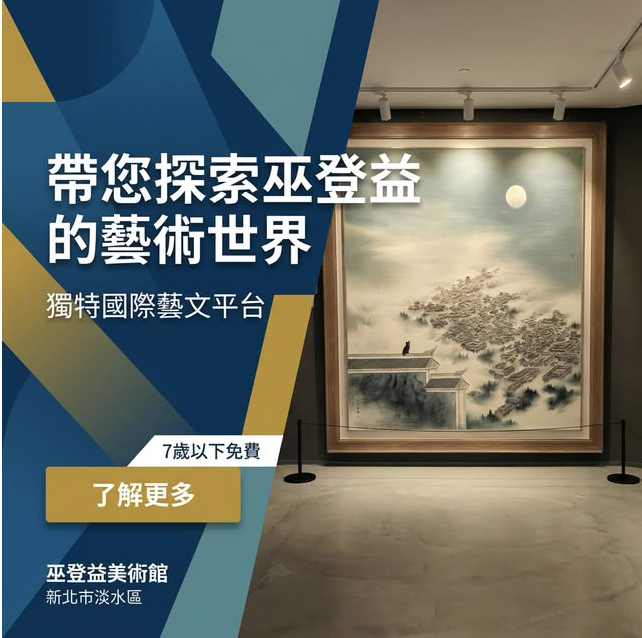
At first, the most noticeable change was speed. Campaigns that previously took days of preparation could be built and launched faster, with more creative variations from the same exhibition concept.
Over time, the workflow shifted: instead of manually creating every new direction from scratch, new drafts could build on what was already performing — refreshed creative and different audience combinations, not random guesses.
Ready to Launch Smarter Campaigns?
Budget Optimization Became More Controlled
Another shift happened in how budgets were managed.
Instead of manually adjusting spend every day, the team started receiving clearer recommendations on where to increase or reduce budgets based on performance signals — aligned with how AI Optimization surfaces reallocations when conversion data is trustworthy.
At first, they reviewed suggestions manually. As they gained confidence, they allowed more automated adjustments for stable campaigns, especially when scaling winning ads.
This reduced constant firefighting and made scaling more predictable.
The Results (After Optimization Phase)
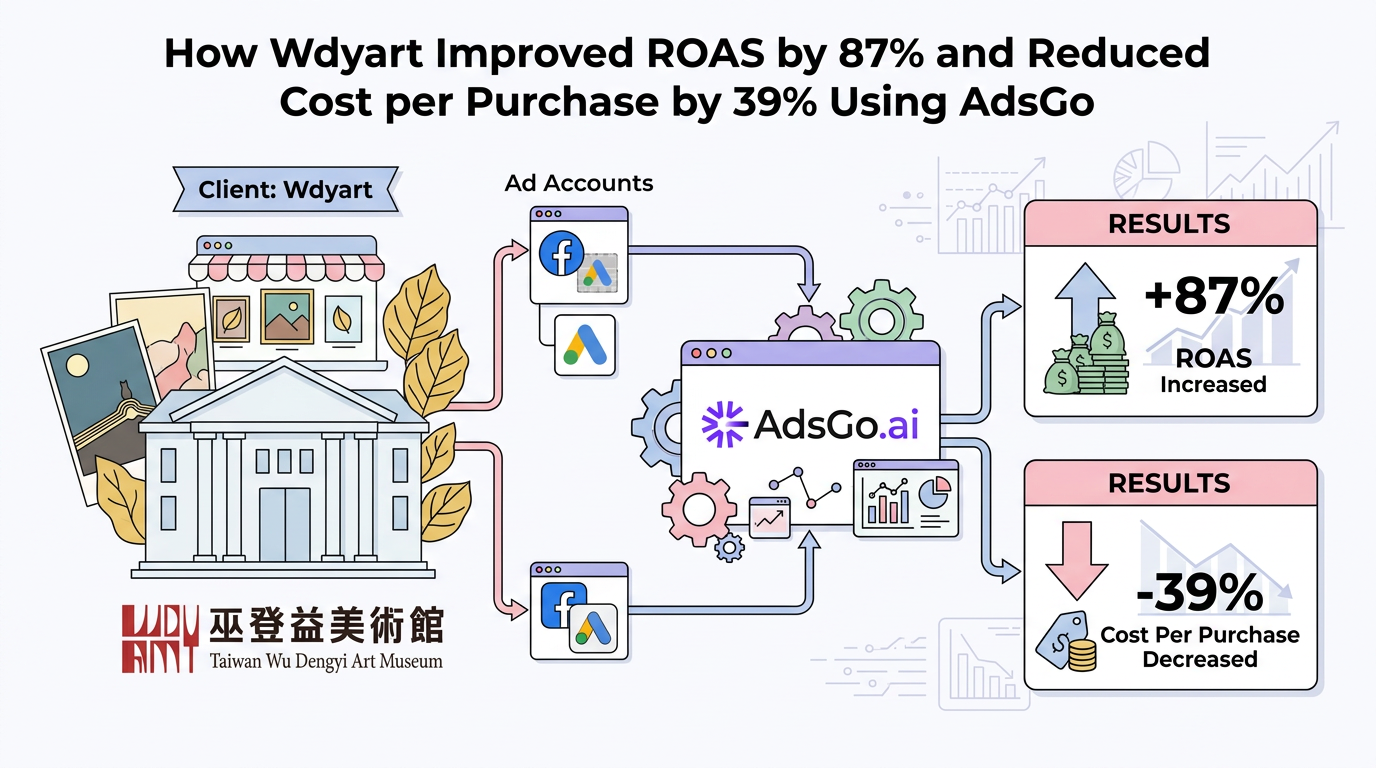
After integrating AdsGo into their workflow, Wdyart reported:
- ROAS increased by ~87% (vs their prior baseline in that phase).
- Cost per purchase decreased by ~39%.
- Creative production became significantly faster.
- Campaign performance became more stable across different exhibitions.
Why It Worked
The improvement didn’t come from one single ad or campaign.
It came from how execution changed.
| Area | Before AdsGo | After AdsGo |
|---|---|---|
| Creative production | Heavy manual work per campaign | Faster and more repeatable |
| Testing | Slow and limited | More structured, more iterations |
| Campaign structure | Varied from one push to another | More consistent across exhibitions |
| Optimization | Intuition-heavy | More driven by performance signals |
| Scaling winners | Ad hoc | More systematic expansion |
What Wdyart Learned
Looking back, the team pointed to two changes that mattered most.
First, they produced more creative variations from each exhibition idea — so they could test narratives quickly and see what resonated.
Second, campaign structure became more consistent — moving from ad-hoc tests toward a clearer role for each campaign in the overall strategy.
As the team summarized:
“We moved from manually managing each campaign to a system where ads are continuously generated, tested, and improved based on performance.”
Final Takeaway
Wdyart didn’t change their brand or mission — they changed how advertising was executed day to day.
Before AdsGo, growth depended on manually building and optimizing each push. After AdsGo, the workflow became more continuous: faster cycles of creation, testing, and optimization.
The shift was not simply “more ads” — it was faster learning and a more efficient path from exhibition idea to accountable performance. Browse more stories like this on the AdsGo case studies page.
Ready to see similar results for your campaigns? Try AdsGo free — no long-term contract. → Start free